From Reactive to Relaxed: 5 Simple Things You Can Start Today
If you’re tired of stressful walks, constantly scanning for triggers, and feeling like you don’t want
to leave the house with your dog, you’re not alone. Reactivity is one of the most common
challenges dog owners face—but it doesn’t have to be permanent. It’s something we help
people reverse every single day and this guide breaks down five practical strategies that we
use, that can help to transform your walks. You’ll learn how to stop the cycle of reactive
behaviour, build better habits, and set your dog up for success with effective management. Each
tip is simple to understand and designed to fit into your daily routine. Focus on these 5 things if
you want your dog to go from reactive to relaxed.
1. Stop the “Bad Rehearsals”
Why This Matters
Think of reactivity like a bad habit your dog is practicing. Every time they lunge, bark, or lose
control around another dog, they’re actually getting better at being reactive. Each outburst
strengthens the pattern, making reactions more intense and more frequent over time.
The solution? Stop letting them practice. This isn’t about avoiding triggers forever—it’s about
being strategic. When you spot a potential trigger ahead, turn around or change direction before
your dog starts reacting. You want to maintain the space needed to keep your dog from tipping
over their threshold. This keeps them in a zone that’s challenging but not triggering.
The idea isn’t to avoid dogs forever, it’s to systematically desensitise and counter condition them
to their trigger through controlled exposure. This isn’t “giving up”—it’s protecting your dog’s brain
from getting overwhelmed so they can stay calm enough to learn. Over time, as your dog
expects to disengage rather than react, they’ll naturally be willing to get closer to triggers without
losing control.
Key Concept
Pay attention to your dog’s body language and subtle behavioural cues to try and keep them in
their yellow zone. A distance that’s challenging but not triggering.
Green Zone: Your dog is far enough away that they’re not interested in the other dog.
Yellow Zone: Your dog is aware, interested and maybe not feeling great, but they’re able to
maintain composure.
Red Zone: Your dog is over their threshold and a reaction has been triggered.
Action Steps
1. Identify Triggers: Know what sets your dog off. Big or small? One or multiple dogs? Male
or female? Certain breeds?
2. Scan Ahead: Be your dog’s eyes and ears so that you can avoid a dog and keep them in
the yellow.
3. Create Distance: Turn away before reactions start using the Emergency U-Turn technique
and The Look.
4. Build Gradually: Over time, decrease distance as your dog improves. Don’t keep that
distance forever, over time their yellow and red zones should shrink.
2. “The Look” (Disengagement Training)
This technique is about rewiring your dog’s automatic response. Instead of seeing another dog
and immediately reacting, you’ll teach them to look at the trigger and then immediately check
back in with you for a reward. This cancels out the association between seeing dogs and having
outbursts, replacing it with a much healthier pattern.
The Process
1. Dog Sees Trigger: Dog sees the trigger at a distance that isn’t immediately triggering.
2. Dog Checks In: Looks back at you instead of reacting.
3. Instant Reward: High-value food reward or play immediately.
How to Practice
Start far away from triggers where your dog can see them but stay calm.
Wait for them to naturally look back at you, or call their name if they’re not going to check in
on their own.
The instant they make eye contact, say “YES” and deliver their reward.
Reward with something amazing—steak, cheese, chicken, hot dogs, or their favorite toy
they don’t have constant access to.
Pro Tips
If your dog isn’t taking their food, it’s a good sign that although they’re not overtly reacting,
they’re still too stressed to eat. Try increasing their distance to the trigger.
Play is great because the movement releases endorphins (happiness) and burns cortisol
(stress). You can get your dog moving with food too by making them chase you to get it.
Get 2-3 successful reps in and then retreat to their green zone for a break and quit while
you’re ahead. This avoids ‘trigger stacking’ and rehearsing the reactive behaviour.
Practice this consistently, and you’ll see your dog start to automatically look at you when they
spot another dog, expecting their reward instead of preparing to react.
3. Master the “Emergency U-Turn”
Every reactive dog owner needs a reliable “get out of jail free” card for those moments when a
trigger suddenly appears around a corner. The Emergency U-Turn is that card—a practiced,
quick 180-degree direction change that becomes so automatic for your dog that it overrides their
reactive impulse.
How to Master It
Practice at Home First: Start in your house or backyard with zero triggers around. Use a
special cue word like “Let’s go!” and turn 180 degrees quickly. Reward your dog the moment
they follow.
Build the Habit: Practice 10 random U-turns throughout each walk. Make it fun and
rewarding every single time. The more you practice in calm situations, the stronger the
pattern becomes.
Deploy When Needed: When a dog suddenly appears, use your cue word and execute the
U-turn before your dog has a chance to react. The training kicks in and overrides their
impulse.
Practice Makes Perfect: 10 reps per day = deeply ingrained response that activates
automatically in real situations.
When you practice this consistently—even just 10 times a day randomly throughout walks or
around the house—it becomes so deeply ingrained that when a real emergency arises, your
dog’s trained response kicks in automatically. It keeps everything positive, everyone safe, and
moves your dog back to a comfortable and productive distance before a reaction occurs.
4. Get a Health Check
Here’s something many dog owners overlook: sometimes reactivity isn’t just behavioral—it’s
physical. When dogs don’t feel good, they become touchier, crankier, and quicker to snap at
things that normally wouldn’t bother them. Sound familiar? Dogs experience this even more than
we do because they have less stable emotions and less impulse control.
Potential Issues
Hidden Pain or Illness: Undiagnosed injuries or conditions can make every interaction
uncomfortable.
Excess Weight: Being overweight puts stress on joints and makes movement painful.
Nail Length: Overgrown nails can cause foot pain with every step.
Diet Issues: Food that doesn’t agree with them causes ongoing stomach discomfort.
What to Do
1. Schedule a thorough vet visit.
2. Specifically mention pain, discomfort, and digestive issues.
3. Check your dog’s weight and body condition.
4. Assess whether their current diet is working (check their stool quality).
5. Address any physical issues before expecting behavioral change.
Think about it: if your dog has an injury you’re not aware of, they’re carrying extra weight, their
feet hurt from long nails, and they have a constant stomachache from food that doesn’t agree
with them—is it any wonder they’re always in a terrible mood and lashing out at things that
bother them? Physical comfort is the foundation for emotional stability.
5. Be Smarter With Their Exercise
Reactivity has many causes—defensive, frustration-based, predatory, or overstimulation. But
one thing that helps all types of reactivity is correctly addressing your dog’s energy expenditure.
Most people get this wrong in both the short term and long term, and it’s sabotaging their
progress.
The Problem vs. Solution
The Long-Term Problem: 99% of dog breeds have working dog origins—from small
Dachshunds to large Mastiffs. They weren’t designed to just walk the same streets at 4 km/h
a few times per week. That barely scratches the surface of truly fulfilling them. Without
appropriate outlets, they become pent up and frustrated.
The Short-Term Solution: If you’re leaving the house with a dog on a full battery, you’re
setting yourself up for failure. Play an engaging game with your dog for 10-20 minutes
before you start your walk. This takes the edge off and helps them start in a calmer state of
mind.
The Game-Changing Strategy
Find a game your dog absolutely loves to play, and swap it out for half of their walks. This could
be:
Fetch or frisbee
Tug-of-war
Hide and seek
Scent work games
Flirt pole
Agility exercises
Wrestling
Something specific to their breed
By trading walks for play, you’re giving them the mental and physical stimulation their breed was
designed for. This means less frustration, less pent-up energy, and a dog who’s actually ready to
handle the challenges of walking near triggers. Play before walks = success during walks.
Your Path Forward: From Overwhelmed to Confident
You now have five powerful tools to start transforming your dog’s reactivity this week.
Remember: don’t try to implement 20 new things all at once. Start with doing these five simple
things really well, because less is more when it comes to sustainable behavior change.
1. Schedule that vet visit: Mention pain, discomfort, and digestive issues specifically.
2. Stop walking in high-traffic areas: Choose routes with space to create distance from
triggers.
3. Trade walks for play: Give them lots more engaging games and activities.
4. Practice the Emergency U-Turn: 10 reps per day until it’s automatic.
5. Work on “The Look”: Reward disengagement from triggers consistently.
If you’re tired of walking your dog in the dark, crossing the road whenever you see another dog,
and constantly looking over your shoulder, there’s hope. These aren’t quick fixes, but with
consistency and patience, you’ll start seeing real progress.
Your dog isn’t broken—they’re just overwhelmed. By stopping the bad rehearsals, teaching new
patterns, addressing physical discomfort, and providing appropriate outlets for their energy,
you’re giving them the support they need to succeed.
The journey from reactive to relaxed starts with a single step—and you’ve just taken it by
learning these five strategies. Stay consistent, celebrate small wins, and remember that
progress isn’t always linear. You’ve got this.
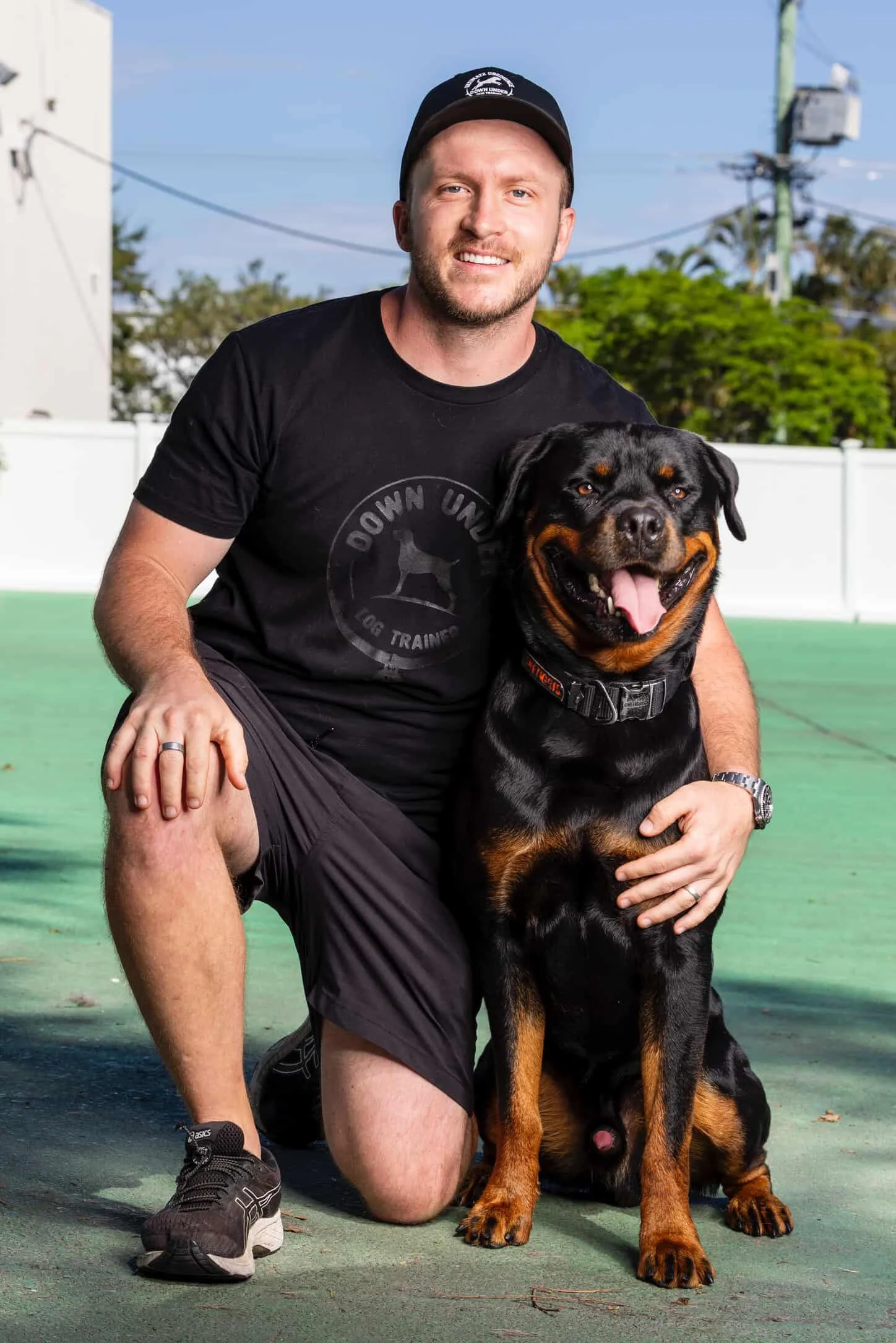
Content extracted from “From Reactive to Relaxed” by Max O’Neill, Down Under Dog Trainer.